
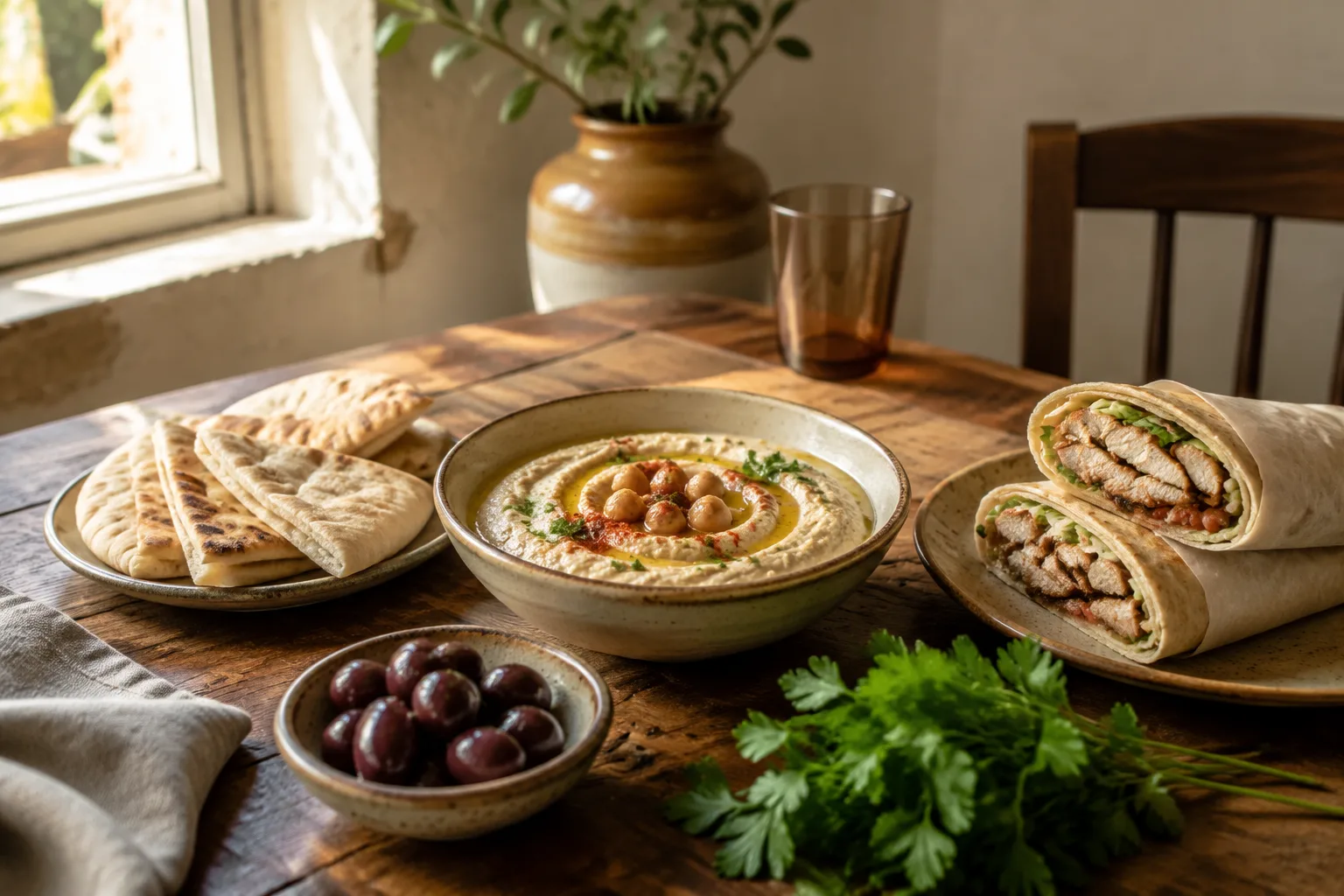
You’ve probably eaten Mediterranean dishes dozens of times without thinking about how they ended up on your plate. That’s fair, because most of us just know they taste incredible and don’t take much effort.
But these recipes carry centuries of history with them, and knowing where they come from makes the food even better. We learned that firsthand. We cooked Middle Eastern recipes long before we ever wrote about them.
On Friday evenings, our mother would pull out the chickpeas while we sat beside her and peeled garlic. Families across the Mediterranean Sea have done the same thing for generations. And their Mediterranean diet traditions traveled from one home to the next in the same way.
In this guide, we’ll get into the origins of favorites like hummus and shawarma. We’ll also cover the ingredients that hold it all together and simple ways to make Mediterranean meals at home.
The Real Stories Behind Hummus Origins and Shawarma History
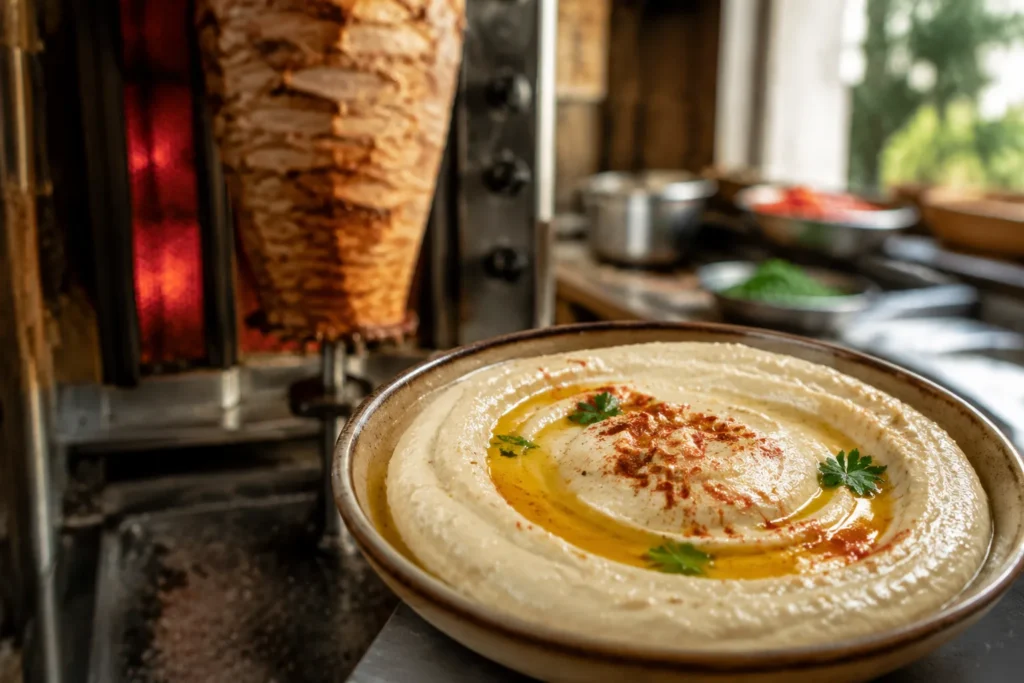
Ever wonder why so many countries claim hummus as their own? That debate has been going on for centuries, and it shows no signs of slowing down. Here’s how two of the most beloved Mediterranean foods earned their place on tables around the world.
How Hummus Became the Most Debated Dip in the World
Hummus goes back centuries in the Middle East, with Lebanon, Egypt, and Palestine all putting their name on it (our family alone has about four different opinions on this).
The base recipe of chickpeas, tahini, lemon juice, and garlic has stayed almost the same across all of them. The differences come down to small details, like how much cumin you add or whether you blend it smooth or chunky.
And honestly, every family we know swears their version is the original. That pride helped push the dip well beyond the Middle East, and the rise of hummus in America put it on grocery shelves as a national dish.
From Ottoman Spit Roasts to Modern Shawarma
Shawarma started as a method of roasting seasoned meat on vertical spits during the Ottoman era. Vendors across the Middle East would layer lamb or chicken with strips of fat for extra juiciness, then shave it off to order. That technique spread quickly across the region.
Today, shawarma is one of the most popular street food options from Cairo to Los Angeles. If you’ve ever waited in line at a late-night Middle Eastern street food spot for one, you know the smell alone is worth the wait.
Now, let’s look at the one ingredient that ties almost every Mediterranean dish together.
Why Extra Virgin Olive Oil is at the Center of Traditional Mediterranean Cuisine
One good bottle of extra virgin olive oil can upgrade every single meal you make. We keep ours next to the stove, the way most people keep salt and pepper. It goes on everything. A drizzle over roasted vegetables, a splash in your salad dressing, or a dip for whole grain bread with fresh tomatoes and feta cheese.
That versatility isn’t new, either. Mediterranean cooks in Greece, Spain, and Turkey have pressed olives for thousands of years. The tradition stuck because extra virgin olive oil adds a fruity, peppery finish that vegetable oil and butter just don’t have.
Bottom Line: Olive oil rounds out the flavor of any dish. And that’s exactly why it sits at the base of the Mediterranean diet pyramid right alongside fruits, vegetables, and whole grains.
What Does a Classic Greek Salad Tell Us About Mediterranean Lifestyle?
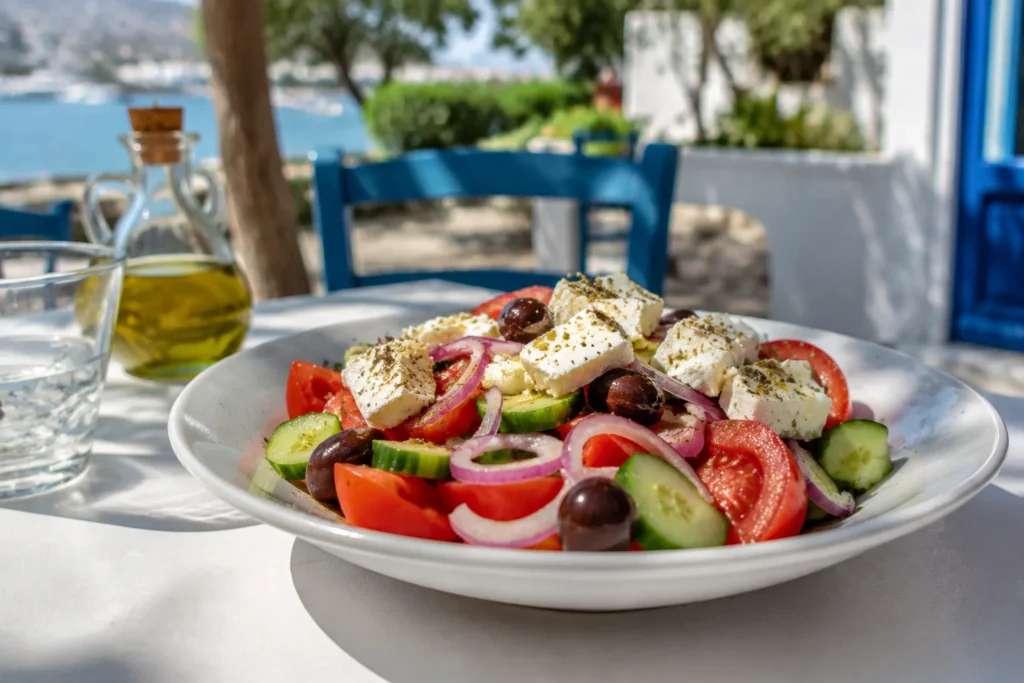
A classic Greek salad is proof that you don’t need a dozen ingredients to make a great meal. The fact that this recipe has stayed the same for so long tells you how deeply rooted it is in Mediterranean culture.
Take a look at what goes into one and what it says about the food.
- Fresh, Seasonal Ingredients: A traditional Greek salad uses just fresh tomatoes, cucumbers, red onion, olives, and feta cheese with a pour of olive oil (no lettuce, by the way; that’s an American addition).
- A Complete Lifestyle: That short ingredient list reflects a Mediterranean lifestyle built around local, seasonal cooking. When your produce is picked at the right time, it carries plenty of flavor on its own.
- A Full Meal, Not a Side: On a Greek island, this salad is lunch. People eat it with whole grain bread and nothing else, and that’s the Mediterranean way.
If you want to start cooking Mediterranean food at home, a Greek salad is the easiest place to begin.
Are Mediterranean Diet Recipes Naturally Gluten-Free?
Many Mediterranean diet recipes are naturally gluten-free because they rely on beans, fish, vegetables, and grains like brown rice instead of wheat. If you’ve ever grilled vegetables with lemon juice and olive oil over rice, that’s already a gluten-free meal. You probably didn’t even think of it that way.
And that’s not the only option. Grilled lamb with spices, tabbouleh made with quinoa, and baba ganoush all skip wheat entirely. The Mediterranean diet covers breakfast, lunch, and dinner without running out of ideas. Think fresh fruit with plain Greek yogurt in the morning, or a big salad with olives and fresh parsley at night.
Once you see how many of these recipes work without gluten, the next part of the conversation usually follows.
How the Mediterranean Diet Pyramid Helps You Lose Weight With Real Health Benefits
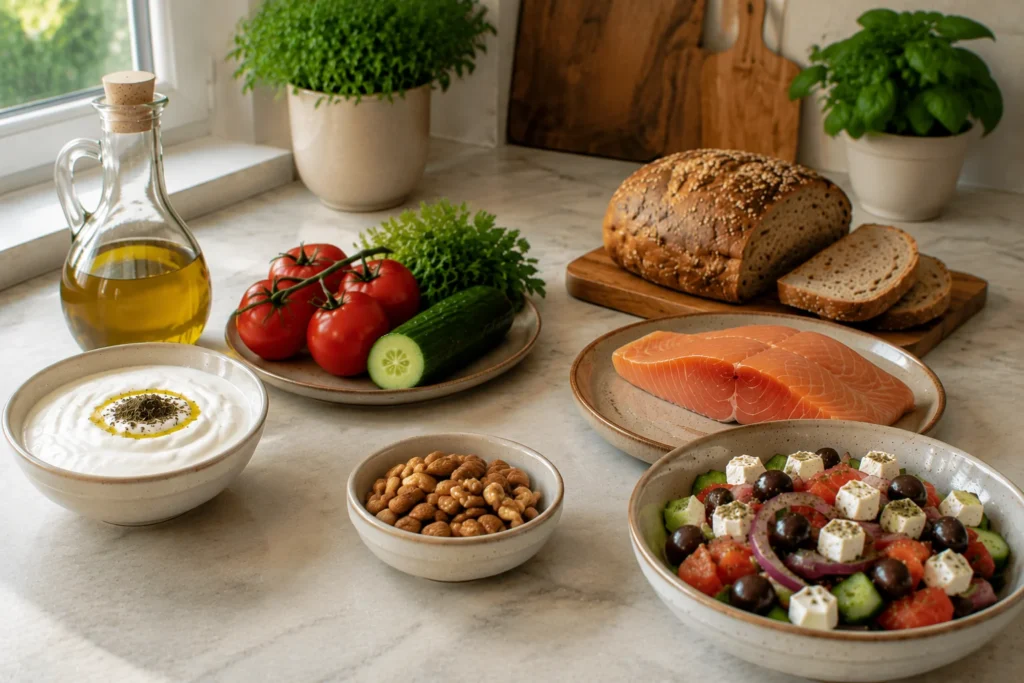
According to a guide from Harvard Health, the Mediterranean diet lowers the risk of heart disease, diabetes, and certain cancers. Beyond that, this diet also helps people lose weight because it doesn’t ask you to give up entire food groups. The pyramid breaks down like this.
- Built on Whole Foods: The Mediterranean diet pyramid puts vegetables, fruits, whole grains, and beans at the base of every meal. Fish and salads show up a few times a week, with red meat saved for special occasions.
- Steady Weight Loss: Studies connect this eating pattern to sustainable weight loss because your meals still feel satisfying (no juice cleanses, no skipping breakfast or dinner). To be honest, that’s what kept us coming back. We never felt like we had to sacrifice flavor for results.
- Easy to Stick With: Other diets tend to cut out fats, carbs, or sugar completely. The diet includes healthy fats, fresh berries, and whole-grain bread in your daily cooking. You’re never left searching for something to eat.
Greek yogurt is another staple in this pyramid. And it pulls double duty as both a cooking ingredient and a quick meal on its own. We’ll get into this more below.
From Greek Island Kitchens to Your Meal Plan: Mediterranean Recipes Using Greek Yogurt
Greek yogurt fits into almost any Mediterranean meal plan because it covers so many roles in the kitchen. You can stir it into breakfast bowls with fresh fruit or use it as a base for salads and dinner dressings with extra virgin olive oil. On top of that, it doubles as a solid marinade for meat and fish.
We ruined a lot of chicken before we figured out that yogurt marinades need a full overnight soak. Once we got that right, the tenderness was night and day. And the uses don’t end with marinades, either.
That same plain Greek yogurt can replace sour cream or heavy sauces in most Mediterranean diet recipes. The swap cuts added sugar and keeps your meals lighter without losing any flavor.
Meal Plan Tip: For a weekly meal plan, try building two or three dinners around yogurt and rotating your proteins and salads throughout the week.
Your Mediterranean Food Guide Starts in Your Own Kitchen
Now that you’ve seen where these dishes come from, the only thing left is to make one yourself. You don’t need a plane ticket or a fancy grocery list. A simple dish like hummus, a big salad, or grilled fish with olive oil and fresh parsley is enough to get started.
Most of these recipes call for a few fresh vegetables, some beans, and moderate amounts of olive oil; that’s it!
So start with one or two salads this week, and once you get comfortable, try adding a new recipe every few days. Before long, Mediterranean cooking will feel like second nature in your kitchen.