If you’ve ever tried to build a Mediterranean catering menu from scratch, you probably know how quickly it gets overwhelming.
Too many recipes, too many opinions, and a guest list with at least one person who “can’t eat anything.” We get it, and after years of cooking Mediterranean food and feeding crowds, we’ve learned a lot about what holds up on a catering table.
So we created this guide to walk you through the dishes, fresh ingredients, and planning steps you need for a menu your guests will remember. We’ll also share tips on choosing a catering company and where to fit in Middle Eastern snacks that round out the spread.
Why Mediterranean Catering Works for Any Event
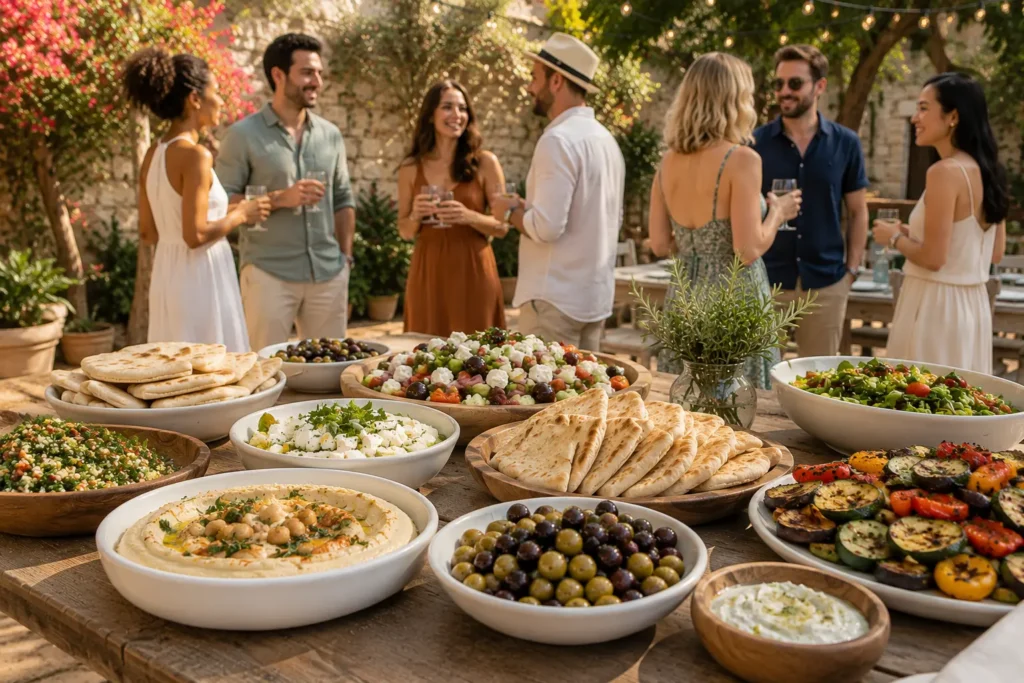
Mediterranean catering works for just about any event because the menu is naturally built around sharing. Office lunches, backyard parties, holiday parties, you name it. Your guests get a wide spread of savory dips, grilled chicken, lamb, and fresh vegetables without you having to overthink it.
Most Mediterranean recipes already lean on grains, olives, and lean proteins alongside plenty of vegetables. That mix covers vegetarian, vegan, and gluten-free diets on its own (anyone who’s hosted a mixed-diet crowd knows this struggle). It also lines up with a Mediterranean eating pattern that balances fresh produce, healthy fats, and whole grains, so the food feels filling without sitting heavy.
The serving style helps too. Shared platters and family-style dishes create a relaxed atmosphere where people actually talk to each other instead of picking at individual plates. And honestly, that’s half the battle when you’re feeding a big group.
Now, let’s talk about what goes on the table.
Main Courses and Sides That Steal the Show
We’ve put together enough spreads to know that sides can outshine the main courses if you do them right. A balanced catering menu needs both, so here are the dishes we keep coming back to.
- Grilled Proteins First: Chicken shawarma and lamb kofta bring bold flavors that hold up well at any event. Serve them with warm bread, rice, or a fresh salad, and they work alongside just about any appetizer on the menu.
- Baba Ganoush and Deviled Eggs: These two appetizers offer completely different textures, which is exactly what you want on a catering spread. Baba ganoush has a smoky, creamy taste that goes well with crackers or veggies, and deviled eggs with za’atar add a savory, herby bite (yes, even the people who say they’re not hungry).
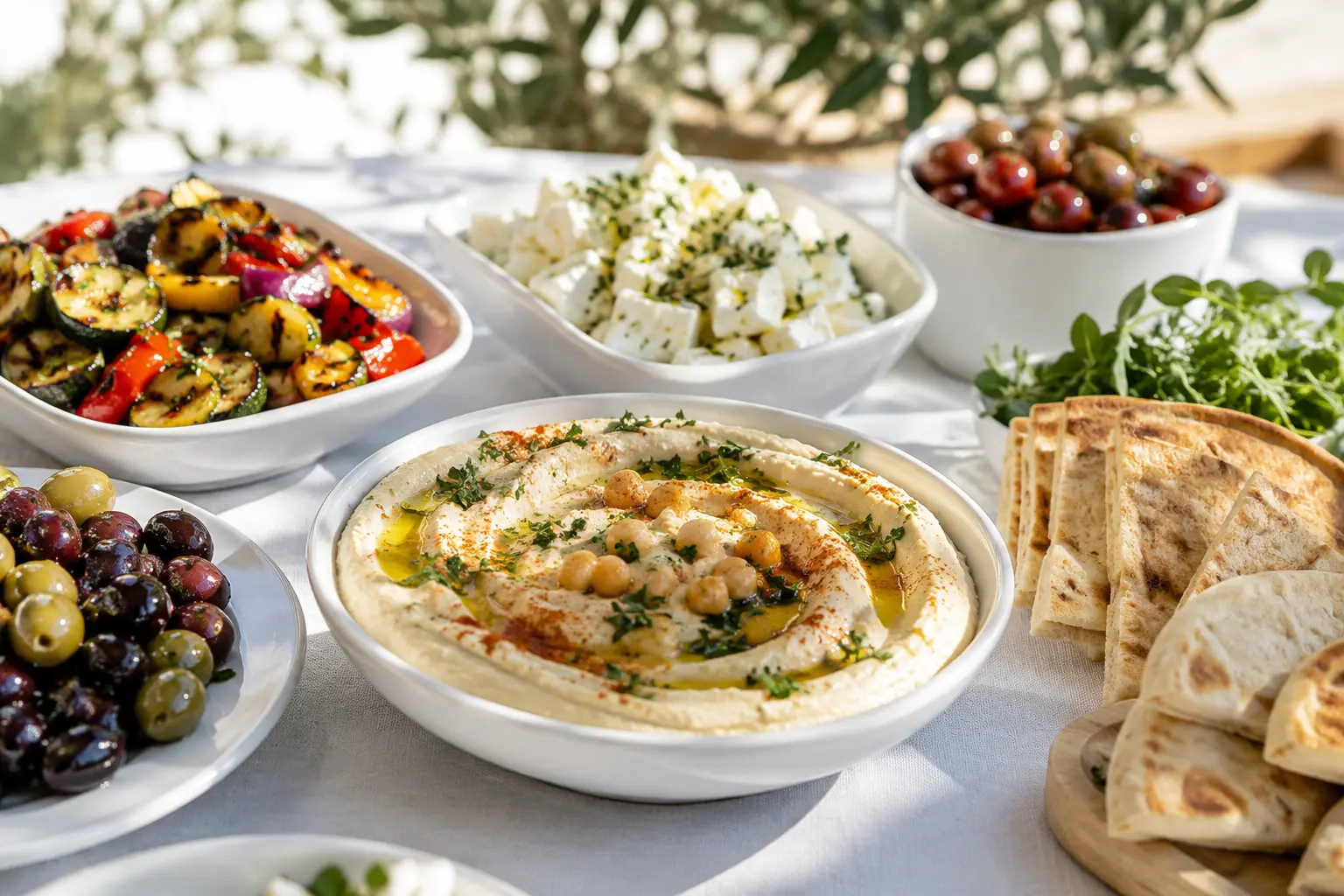
- Lighter Mezze Options: Hummus, olives, feta with lemon, and a simple salad with bell peppers round out the dinner party spread with lighter options between heavier dishes. Nobody feels weighed down halfway through the event, and the whole meal feels complete.
Once you’ve locked in your main dishes and sides, the smaller ingredients are what pull the whole spread together.
Why Fresh Herbs, Goat Cheese, and Cherry Tomatoes Belong on Every Platter
Once you’ve locked in your main dishes and sides, the smaller ingredients are what pull the whole spread together. After years of hosting and cooking for groups, we keep coming back to three in particular.
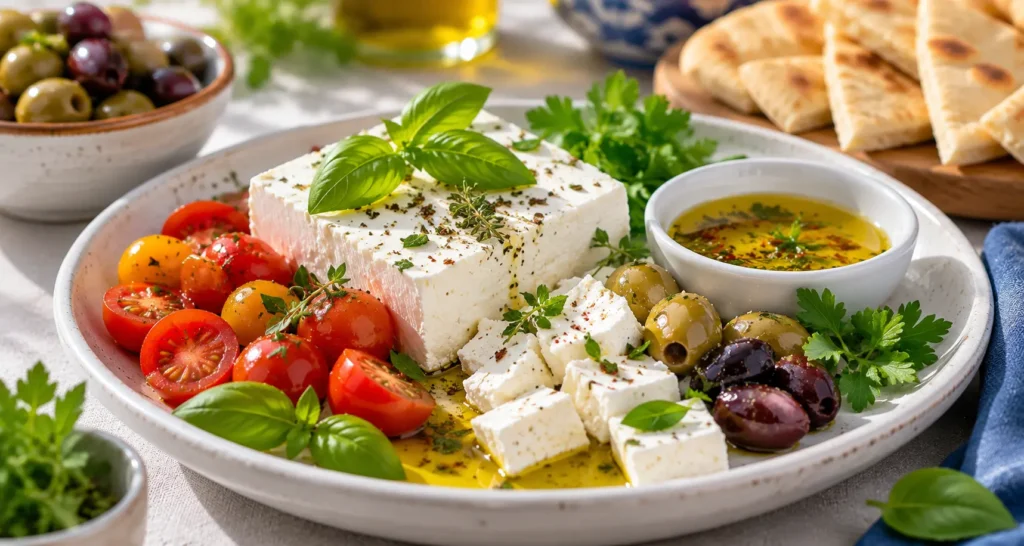
Start with fresh herbs. A handful of basil or mint scattered over a salad or cheese board adds a brightness that dried spices just can’t match. It takes almost no effort, and the difference on the plate is obvious.
Goat cheese works across your whole menu, too. Try crumbling it over roasted vegetables, layering it on flatbread with olives, or setting it next to feta on a mezze platter. We started adding it to almost every party menu after one family gathering where it disappeared before anything else on the table.
And then there are cherry tomatoes, which round things out with color and acidity. Toss them into a salad with lemon dressing, roast them with garlic in the oven, or just set them out alongside hummus and crackers. They also fit right into a heart-healthy Mediterranean diet, which is a nice bonus when you’re feeding health-conscious guests.
How to Plan a Dinner Party Menu Your Guests Will Remember

To be honest, most dinner party stress comes from overcomplicating the menu. A great meal starts with a simple structure, and once you nail that, the cooking and timing get a lot easier.
Let’s look at a formula that works for us every time.
Build Around a Simple Menu Framework
Pick two to three main courses and pair them with four to five sides, including at least one salad and a couple of appetizers. For a recent family gathering, we went with lamb kofta and grilled chicken as our mains, then added hummus, a feta and olive salad, and fresh vegetables with tzatziki. That gave our guests enough variety without us having to juggle a dozen different recipes.
While you’re mapping out the food, don’t skip the sweet side of the table either. A Mediterranean dessert like baklava or a simple lemon cake finishes the meal on a high note without overwhelming your guests.
Prep Smart and Save Your Sanity
A little planning the night before goes a long way. You can make cold dishes like dips, marinated vegetables, and salads a day ahead. That frees up your oven and counter space for hot items on the morning of the event (ask us how we learned that one).
Once the cold food is done, you will have plenty of room to focus on grilling and plating when your guests arrive. But of course, none of this works if the wrong person is behind the food. That’s exactly what we’ll look at next.
What to Look for in a Catering Company
We’ve been on both sides of the catering experience, and a few details tend to separate the caterers worth hiring from the ones you forget about.
Here’s what we recommend looking for before you sign anything:
- Tastings and Flexibility: A solid catering company should let you sample the food before your event and adjust the menu around dietary needs. If they push back on either, that’s a good sign they’ll cut corners elsewhere, too.
- Sourcing and Fresh Ingredients: You’d be surprised how often this gets overlooked. Ask your caterer where they source their ingredients and whether they cook with fresh produce or rely on pre-packaged items. Your guests should be eating food that tastes like it was made that morning, not pulled from a freezer.
- Reviews and Event Photos: Check their past work before you commit. Online reviews give you a feel for how they treat clients, and event photos show you whether the plating and presentation match what they promise.
Before you book anyone, ask for a tasting and a breakdown of where they source their ingredients. Those two conversations will tell you everything you need to know
Building Your Mediterranean Catering Menu Starts Here
Now that you’ve seen how the dishes, ingredients, and planning come together, your next Mediterranean catering menu should feel more manageable.
Start with a guest count and any dietary needs, then let those guide your recipe choices. A few classics like hummus and lamb always work, and mixing in something unexpected keeps things interesting. Try a deviled egg recipe with za’atar or a baba ganoush served warm with fresh bread alongside your other appetizers.
Whenever you’re ready to start planning your next dinner party or event, we’re sharing new Mediterranean recipes and catering tips over at Zaytoon’s. We’d love to help you feed a crowd the right way.