
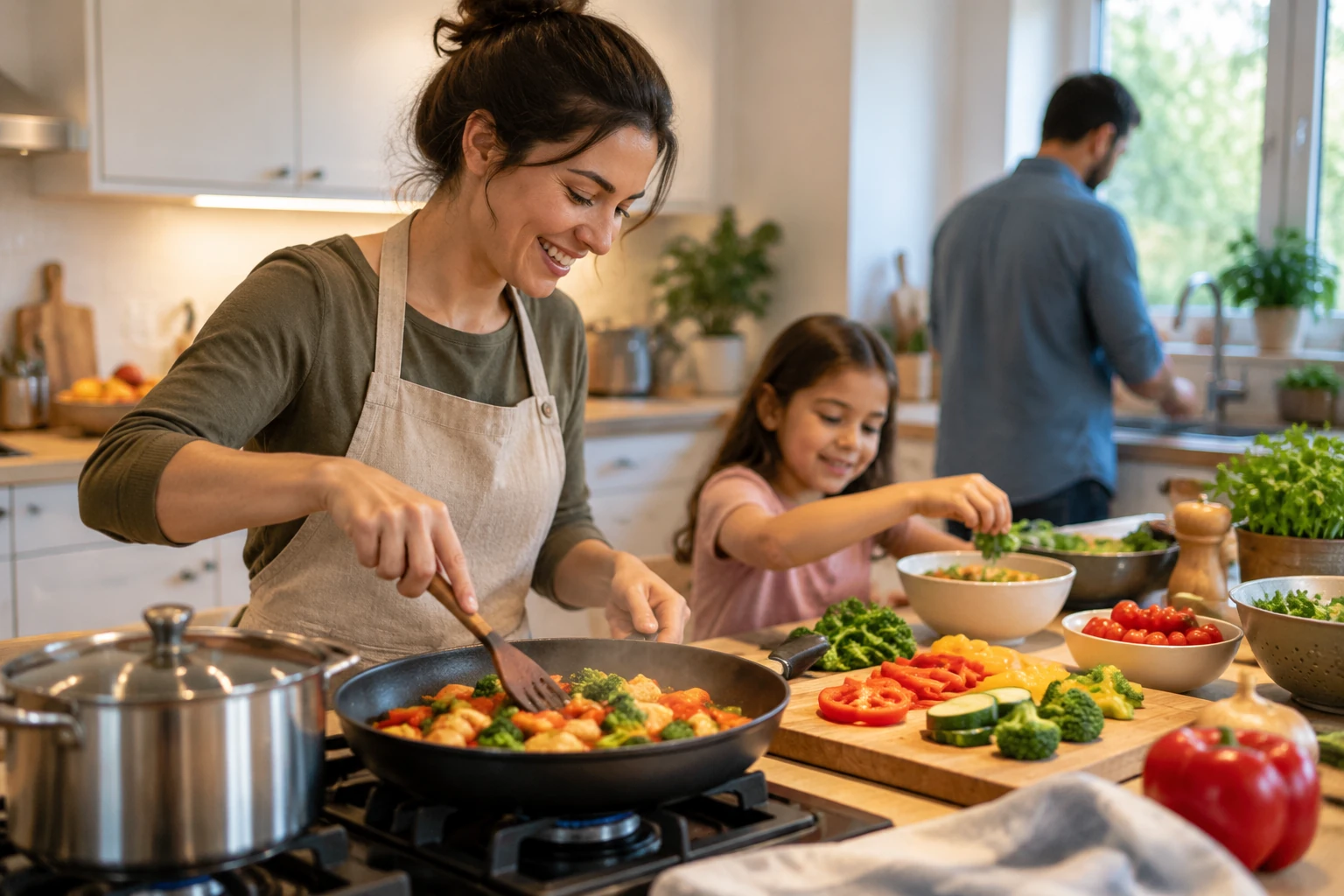
Cooking at home gets easier the moment you stop chasing recipes and start building a handful of habits that carry every meal. Those habits shape how you shop, how you prep, and how calm your kitchen feels at six in the evening.
Still, most people learn in pieces, picking up cooking advice from a YouTube video here and a family recipe there. That scattered start leaves gaps, which is why dinner feels rushed even when you own decent tools and shop well.
This guide covers the kitchen skills, small habits, and cooking techniques that make weeknight meals feel less rushed. Here is the thing. The best home cooking tips are the ones you repeat until they stop feeling like effort.
Building Kitchen Skills That Make Cooking at Home Easier
Most home cooks lose time hunting for tools instead of cooking. Setting up your space and your hands first means the food gets your attention, not the drawers and the clutter behind them.
Below, three habits cover your blade, your prep window, and the gear worth keeping within reach.
Keep a Sharp Knife and a Stable Board
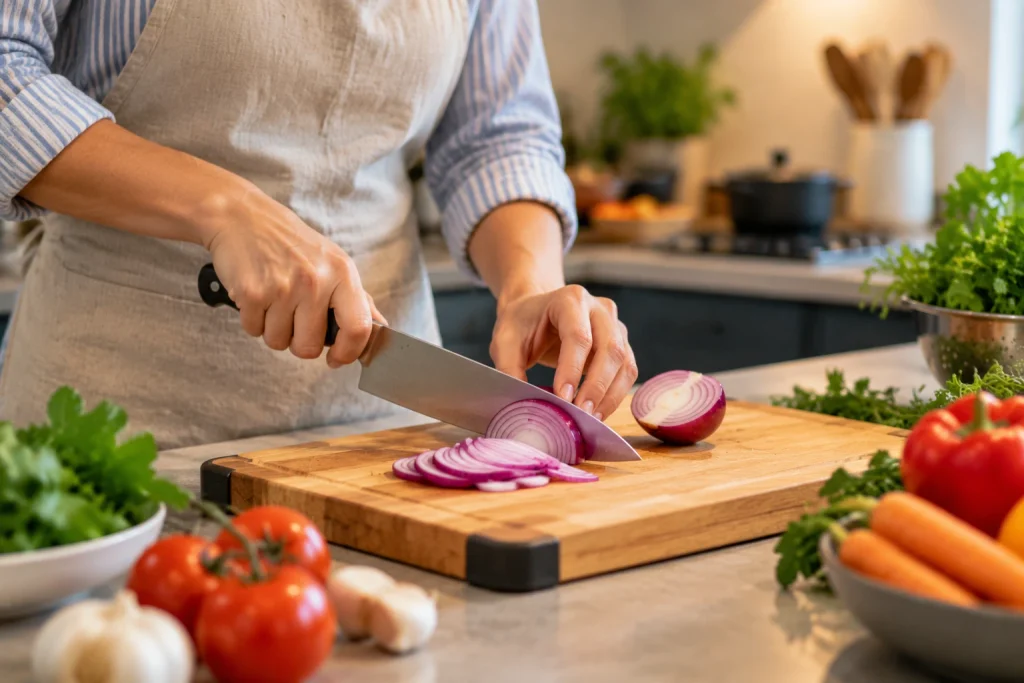
A sharp knife does the work your hand would otherwise force, so it slips less and leaves cleaner cuts. Dull blades cause more accidents than sharp ones, because they slide off an onion skin instead of biting in.
Your board has to sit still for any of that to pay off. A damp paper towel underneath stops it from sliding across the counter (line cooks swear by this one, and they are not wrong).
Honing the edge every few uses keeps it straight, and a pull-through knife sharpener or one proper sharpening twice a year does the rest. We’ve found that one good knife beats a block of eight you never touch.
Why Meal Preparation Ahead of Time Cuts Down Kitchen Stress
Prepping ahead works because it shifts the slow jobs (washing, chopping, and measuring) away from the hour when everyone is hungry. Forty minutes of meal preparation on Sunday can cover three weeknight dinners, side dishes included.
Chefs call this mise en place, everything ready before the heat goes on. With vegetables already diced and a pot of rice done, you are assembling dinner instead of starting it, which cuts your cook time close to half.
Prepped food also keeps you out of the delivery app. Honestly, the nights we skip prep are the nights takeout wins, and that pattern holds in plenty of homes.
Stocking the Few Essential Cooking Tools You Reach For Most
Your drawer needs fewer tools than the catalogs suggest, and the ones that earn space get used almost daily. One heavy pan, tongs, a sheet tray, and a digital thermometer cover most of what basic cooking asks for.
Beyond those four, buy for the food you cook every week rather than the food you imagine cooking. If rice lands on your table three times a week, a heavy-lidded pot earns its shelf, while a garlic press rarely does.
Storing them within arm’s reach of the stove saves the trips that break your rhythm. In our kitchen, the tools we use nightly hang above the counter and the rest sit in a low drawer (the seasonal gear can stay buried; nobody misses it).
What Small Habits Make You Cook Like a Confident Home Cook?
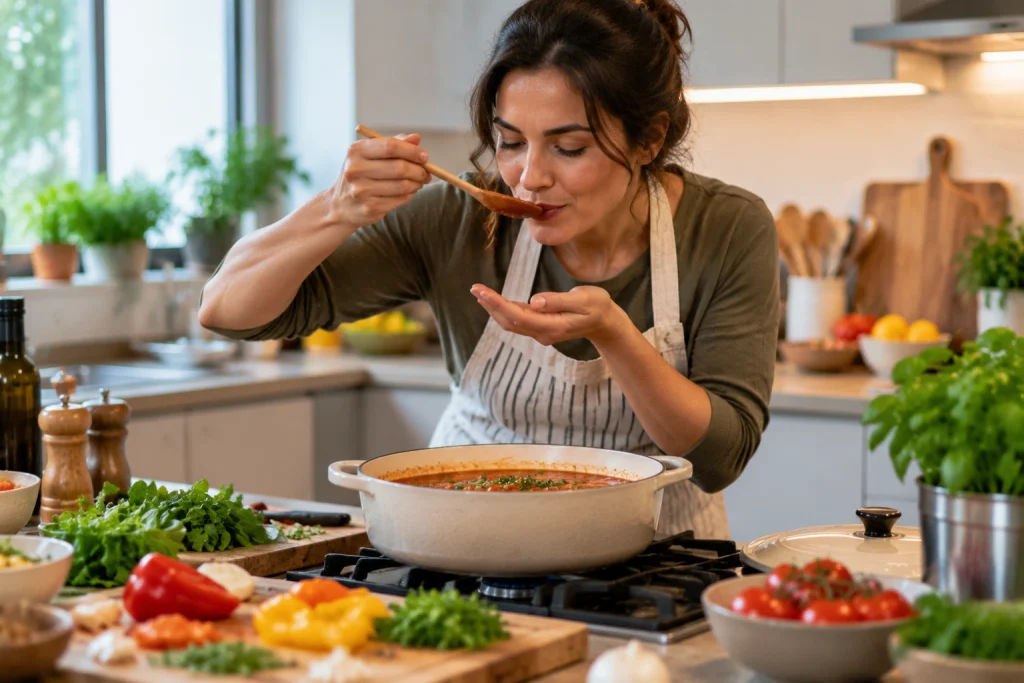
Small habits like tasting as you go and cleaning while you cook make you cook like a confident home cook. What separates a rushed cook from a calm one is usually small, cheap, and repeatable.
With your setup sorted, these three moves are what you practice while the pan is hot.
- Taste at Every Stage: Seasoning early and tasting as you go lets you correct the salt before a dish sets. One pinch at three points beats a rescue attempt at the end.
- Clean While You Cook: Between steps, wipe the board down and wash the pans that finished their job. You will face a clear counter instead of a pile when the food reaches the table.
- Read the Whole Recipe First: Five minutes with the full method shows you which steps overlap and where the oven needs a head start. Surprises cost more time than reading ever will.
Run one habit for a week before adding another, since stacked changes rarely stick. Bottom line: these three lift your kitchen game without a single new purchase.
A Few Home Cooking Tips and Cooking Techniques Make Weeknight Meals Less Rushed
The payoff of a few essential techniques is dinner that comes together without last-minute stress. Most of them work by changing the order of your steps rather than the ingredients you buy.
Heat deserves your attention first, because a properly hot pan sears chicken in about four minutes per side. Olive oil in a lukewarm pan steams the meat gray and adds ten minutes to your night, while a pan brought up properly gives you the smoky flavor a low burner never will.
Salt is the other lever, and different types behave differently: kosher salt seasons evenly, while table salt packs nearly twice the sodium per spoon. Cooks across the US learn that the hard way, usually by oversalting one pot of soup (we have all ruined something that way).
Both cooking skills stick faster when you watch someone do them, which is why a class or a short video beats reading about it. Friends in New York sign up for a knife skills night and come home cutting twice as fast.
Meat and Poultry Basics: Getting Temperatures and Rest Times Right
Once your kitchen habits are set, temperature control becomes the next step in the cooking process worth mastering. Why does meat rest after cooking? The fibers relax and hold their juice instead of spilling it across the board.
Cutting pieces to a similar thickness gives you even cooking, and the numbers below cover the cuts most weeknight meals lean on.
| Cut | Pull temperature | Rest time |
|---|---|---|
| Chicken breast | 160°F | 5 minutes |
| Chicken thighs | 175°F | 5 minutes |
| Ground beef | 160°F | 5 minutes |
| Steak, medium rare | 130°F | 8 minutes |
| Pork chops | 140°F | 6 minutes |
Read the thickest part of the cut, since a probe set in thin meat reads low. Rest the meat on a warm plate, and carryover heat climbs another five degrees on its own.
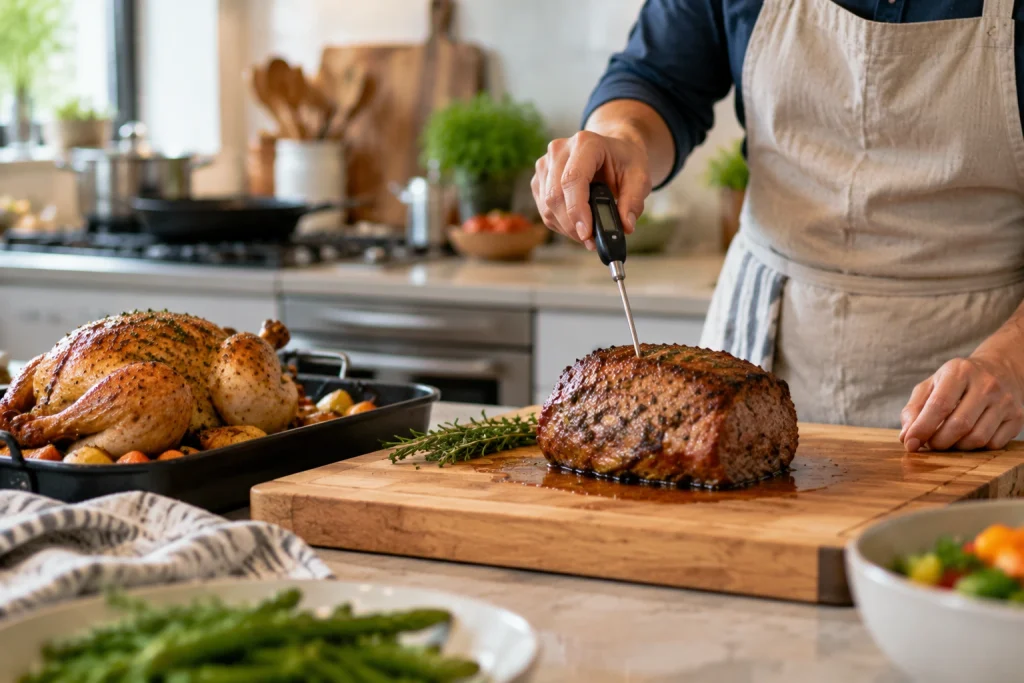
Federal food safety guidance puts the safe minimum for poultry at 165°F, which is exactly where a 160°F breast lands after five quiet minutes.
Make These Home Cooking Tips Part of Your Kitchen Routine
Confident cooking comes from habits you repeat, not from recipes you chase. Sharp knives, prepped vegetables, and an honest thermometer close most of the gap between rushed and relaxed.
Pick one habit this week and keep it until it feels automatic, then add the next. Everything gets easier in small steps, and the food on your table shows it.
Zaytoons serves fresh Middle Eastern food for families across Brooklyn and beyond. Contact us to order ahead, and bring dinner home on the nights you would rather not cook.