
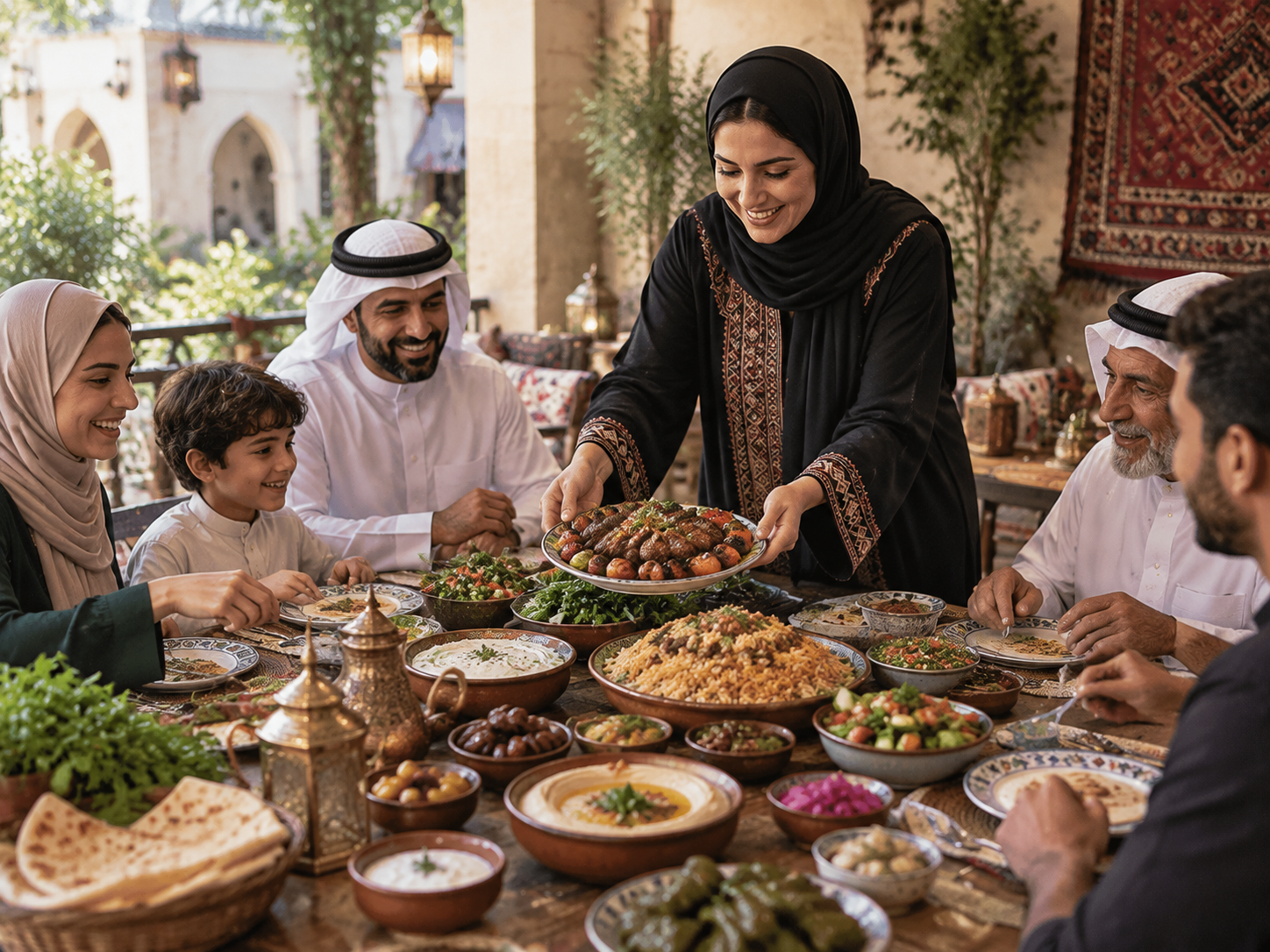
Family recipes preserve Middle Eastern food traditions by passing down exact ingredients, cooking methods, and stories. Each measured handful and every timed simmer carries information that no printed cookbook writes down for you.
Restaurants like Zaytoons serve these same dishes daily. Yet the versions people remember best come from a relative’s crowded stove. That gap between the restaurant plate and the family memory explains why home cooking still anchors this whole food culture.
This guide covers how families guard their recipes, why one dish shifts from house to house, and what keeps the practice alive.
Middle Eastern Food Traditions Start With Family Recipes
Most people assume restaurant menus define Middle Eastern cooking, but home kitchens hold the real recipes and the reasons behind them. Traditional cooking here is a set of habits, not a set of measurements. Those habits build slowly, rooted in what grows nearby, what the budget allows, and who taught whom. Even so, Middle Eastern recipes travel that same slow channel, one cook and one kitchen at a time.
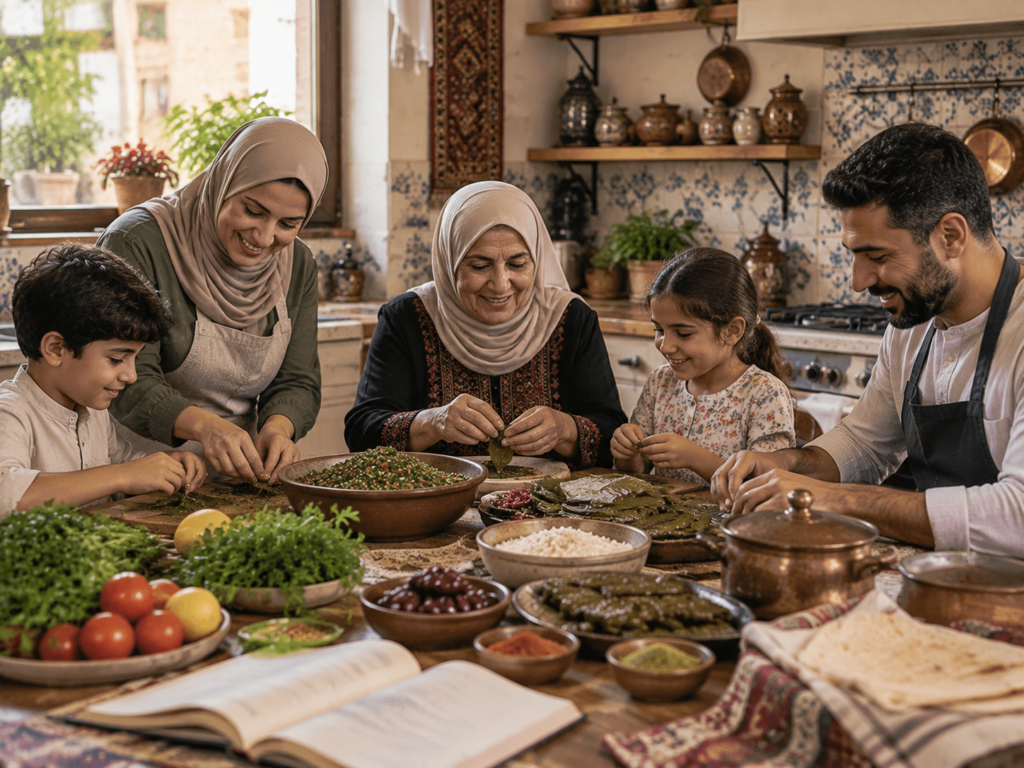
Now, we will look at habits that carry most of the preserving work in Middle Eastern food traditions, and both begin well before anyone lights the stove.
How Ingredients and Middle Eastern Flavors Define a Family’s Traditional Cooking Style
Every household picks a short list of ingredients it never swaps, and that list becomes the family signature. For example, one family finishes everything with green, peppery olive oil. Next door, the neighbors reach for clarified butter instead. So the same stuffed eggplant tastes bright in one kitchen and rich in another (same recipe, two different grandmothers).
Beyond fat, the acid choice splits families just as sharply across Middle Eastern countries and the towns inside them. Some cooks squeeze lemon over everything from lentil soup to grilled fish, while others lean on sour pomegranate molasses. That one choice changes how much garlic and salt a dish needs, which is why swapping it breaks the balance.
In practice, the guarded list runs to five items:
- Olive oil
- Lemon
- Garlic
- A house mix of herbs and
- Spices built on za’atar and sesame seeds, and good pita bread.
We have watched cooks drive across town for one brand of tahini rather than take the closest jar on the shelf. That sesame paste loosens into the tahini sauce they spoon over falafel and roasted vegetables. Their stubbornness is the preservation method, because these flavors and traditions survive only when the core stays the same.
Why Oral Instructions Protect Middle Eastern Recipes and Food Heritage Better Than Written Ones
A spoken recipe carries the corrections. A written card, by contrast, only lists the steps. When the dough looks wrong, your aunt notices before you do and shows you the fix with her hands, something no written instruction can replicate. Since paper cannot carry that kind of correction, families keep the teaching attached to a person.
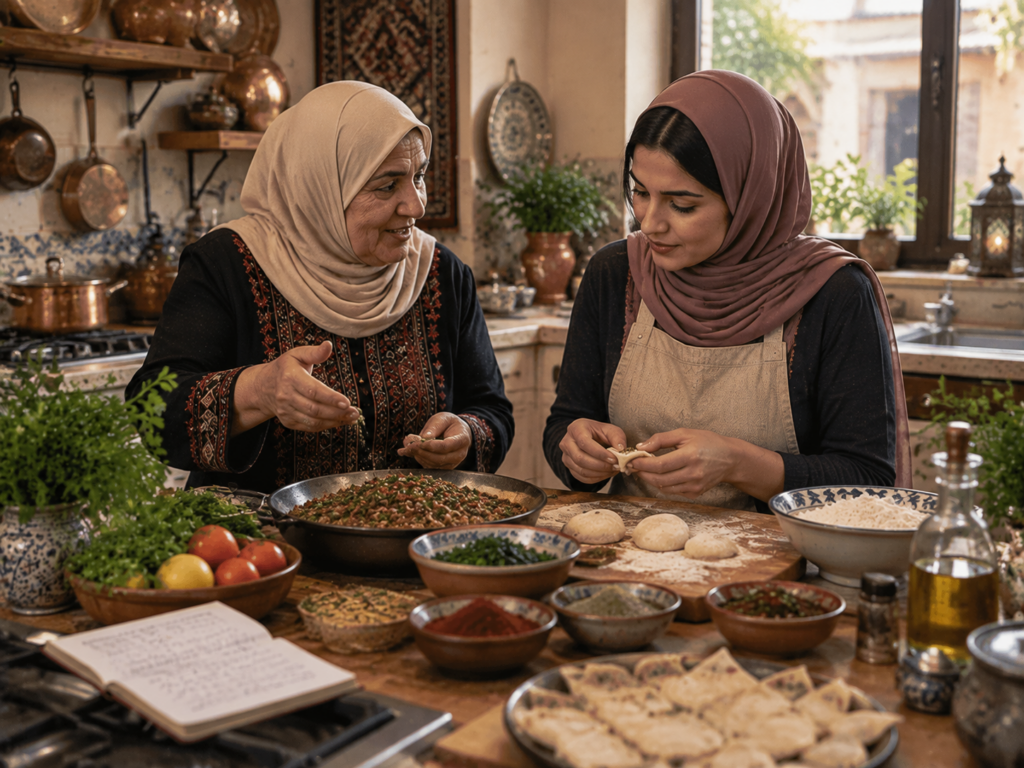
Timing is where the gap shows most, because these kitchens run on feel. A card says simmer for 40 minutes. Grandmothers say simmer until the oil rises to the top. Change the stove and the card fails. The other instruction works anywhere.
Because of this, a family loses a recipe the moment nobody stands beside the cook and asks questions. This is food heritage in its most fragile form, one person wide. Honestly, the questions that feel too obvious are the ones worth asking, since those answers vanish first. So, the ideal move is to record the session on your phone while you are there (messy audio beats a neat card).
Why Do Popular Middle Eastern Dishes Taste Different in Every Home?
Have you ever tried hummus and falafel? If yes, then you must have noticed that they taste different in every home because families adjust the spice mixes their grandparents handed down. These plates travel well, but the home versions stay stubbornly local. Four variables do the work in this circumstance, and every one reflects a decision somebody’s great-grandmother made that nobody has changed since.
- Chickpea Ratio: Dried chickpeas soaked overnight build a thicker hummus than canned ones, and peeling them changes the texture completely. Some families work in fava beans, a habit carried over from Egypt and North Africa.
- Spice Mix: Bold spices do the heavy lifting here, and nobody measures the cumin, coriander, or dried mint out loud. Shift the cumin up, and the herbs down, and the falafel turns darker and earthier.
- Frying Method: Oil at 350°F keeps the crust crisp while the center stays green and soft. Cooler oil soaks straight into the patty, which is why one cousin’s falafel always feels heavy.
- Family Garnish: On top go the finishing touches: a pool of olive oil, paprika, whole chickpeas, or chopped parsley. These tell you which family made the bowl before anyone takes a bite.
Look, none of these versions is wrong. Each one records a choice a family made and kept. Your favorite Middle Eastern dish is somebody’s household standard, never a fixed formula. Taste four bowls side by side, and you are tasting four separate histories, which is the part of Middle Eastern culture that nobody can bottle.
Traditional Middle Eastern Dishes Every Family Still Makes, From Rice Dishes to Sweets
Cooking at home has one big reward: tasting a dish that has stayed the same for decades. Certain traditional dishes survive across the region because families treat them as fixed, cooking them for holidays and funerals alike. Sweet and savory both make the list, and each side carries its own rules.
Why Baklava, Phyllo Dough, and Other Middle Eastern Desserts Demand a Grandmother’s Patience
Baklava rewards slow hands and punishes rushing at every single step. She brushes 30 or more sheets of phyllo with butter, one at a time, before the nuts ever go in. Rush that, and the layers fuse, so the tray turns chewy instead of shattering under the fork.
Syrup carries its own rule, and families guard it more closely than the pastry itself. Hot syrup on hot pastry makes the whole tray soggy, so one side must cool while the other stays warm. Lemon juice in the syrup stops the sugar from crystallizing, which is why almost every version includes it. Some houses finish it with rose water and others with orange blossom water, and nobody ever switches sides.
Every autumn, we watch home bakers give up a full afternoon to one tray for a single wedding. These desserts run on patience more than sugar. That afternoon is the point, because the effort marks the occasion as important. Nobody rushes a tray meant for 40 relatives (the aunts always notice).
Keeping Grilled Meats, Baba Ganoush, and Savory Classics Consistent Across Homes
Savory classics stay steady because families agree on a few rules and then defend them. Baba ghanoush needs eggplant charred over open flame until the skin collapses, never roasted in a covered oven. If you skip the flame, you lose the smoke, and the smoke is the whole reason anybody makes it.
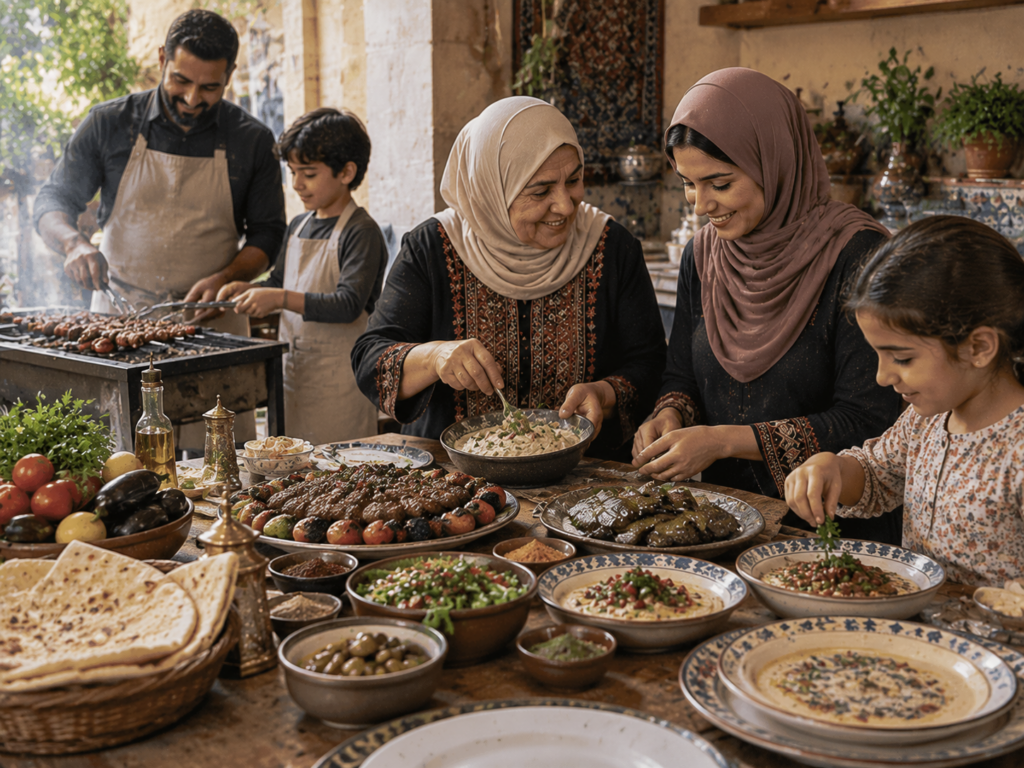
Rice follows the same discipline in kitchens from Saudi Arabia to Lebanon, where the bottom crust decides how a cook is judged. Families toast the grains in butter first, then leave the pot alone for the last ten minutes. A wide platter of rice and roast lamb is the Middle Eastern main most families bring out for guests. Kofta and grilled kebabs keep fixed spice ratios, and younger cooks copy them exactly before changing anything.
Pita bread holds the system together, and you feel the gap the first time you sit down without it. You tear it, scoop with it, and skip the spoon, the way street food vendors expect. Bottom line: a classic Middle Eastern spread is built to be eaten with your hands.
Keeping Family Recipes and Cooking Techniques Alive Today
Now you know how these dishes form. Here is how families keep them going through crowded modern weeks. Family gatherings still do most of the work, since one Sunday of rolling stuffed grape leaves refills three freezers at once. Younger cousins show up for the food and leave with the method, which is exactly the trade the older cooks want.
Phones now work better than any recipe card a family has ever kept. Two minutes of video of your mother shaping kibbeh from bulgur wheat and ground meat captures what no written line can describe. Shared albums and voice notes move Middle Eastern foods from Brooklyn to Beirut, which helps when relatives live six time zones apart.
Restaurants carry part of the load too, though not in the way most people expect. One good plate of authentic Middle Eastern cuisine gives a homesick family a reference point, a reminder of what the dish should taste like. Then they go home and cook it, which keeps these culinary traditions in circulation instead of stuck on a menu.
Families that write nothing down still win, as long as somebody keeps cooking every week. Teach one person under 25 per recipe, and the Arabic names, the spices, and the timing all survive together. Centuries of Middle Eastern food traditions have run on that system, without a single printed cookbook.
Bring These Cultural Recipes and Traditional Middle Eastern Cuisine Into Your Own Kitchen
Cultural recipes carry more than flavor. They hold the method, the timing, and the reason behind every step. Protect that, and you protect Middle Eastern cuisine itself, one kitchen at a time.
Start this week by cooking beside someone older and writing down what they say out loud. Then make the dish alone, get it wrong once, and ask them why. Questions like that are how a culinary tradition moves one generation further.
Ready to taste the versions that began in family kitchens? Visit Zaytoons for hummus, falafel, and baklava made the way families have made them for generations.