
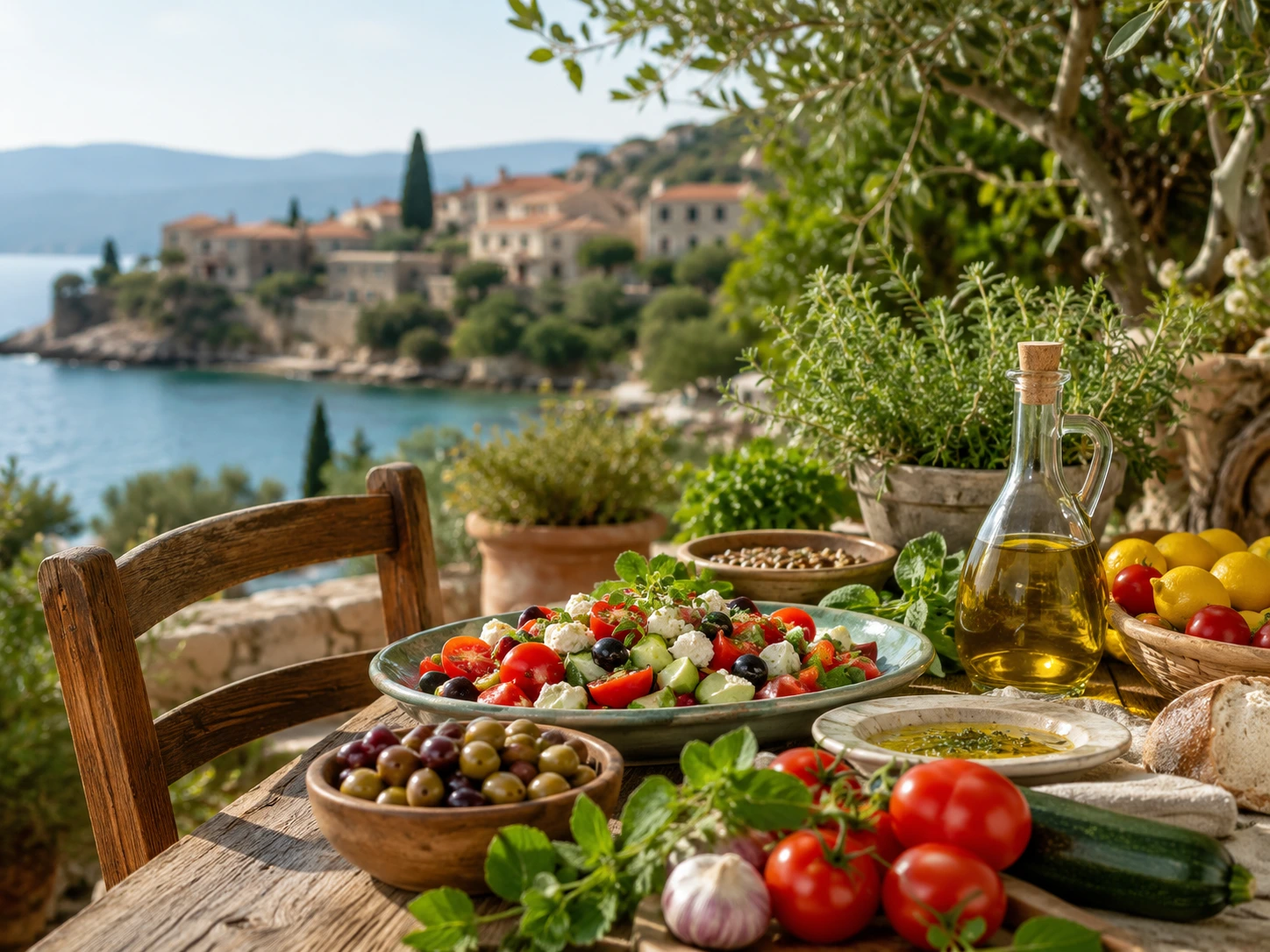
The Mediterranean diet asks you to pull up a chair. It focuses on health through fresh vegetables, good olive oil, and essential herbs. That approach has nourished people across southern Europe, the Middle East, and North Africa for centuries.
This article covers the main ingredients and the Mediterranean diet pyramid. It also looks at everyday foods like Greek salad and Greek yogurt, and how this way of eating fits gluten-free needs too (yes, even if you avoid wheat).
By the end, you’ll have a clear picture of why this way of eating continues to appear in health research and how to build your first Mediterranean grocery list.
Mediterranean Diet Benefits: What the Research Shows
The Mediterranean diet is consistently linked to lower rates of cardiovascular disease, type 2 diabetes, atrial fibrillation, and breast cancer. These findings have encouraged researchers to continue investigating the diet and its potential health benefits.
Here’s what two of those findings look like up close.
1. How Eating Patterns Drive the Results
This eating style does not rely on calorie counting, cutting food groups, or fixed meal plans to improve health markers. Each meal centers on vegetables, whole grains, beans, and fish. Red meat shows up once or twice a week at most.
The benefits also come from how these foods work together. The combination of certain foods eaten over time drives many of the health benefits (think olive oil with leafy greens, not olive oil alone).
Eating habits also play an important role. Traditional Mediterranean eating places value on shared meals, which may help people stick to these habits over the long term.
Regular eating patterns reinforce this lifestyle, and the health benefits tend to build with long-term adherence.
2. What the American Heart Association Says About It
Backed by the American Heart Association, the Mediterranean diet helps to boost brain and heart health. Research also highlights its role in preventing cardiovascular disease through balanced, nutrient-dense food choices.
Additionally, the AHA actively encourages people to do the Mediterranean diet, a food-first model for lowering LDL cholesterol. As evidence says, olive oil can help the body to remove excess cholesterol from arteries and reduce blood pressure.
What’s more, no whole food groups get cut out here. Which is why doctors across the US now recommend this eating style to patients with cardiovascular concerns.
Main Ingredients That Make This Diet Work
The Mediterranean diet runs on about a dozen core ingredients. And most of them cost under $30 at any major US grocery store and cover a full week of Mediterranean cooking.
Have a look at what lands on the average Mediterranean plate on a weeknight:
- Core Ingredient Base: The backbone of every Mediterranean dish starts with olive oil, garlic, onions, and fresh tomatoes. You can also add leafy greens, whole grains, and beans to get a complete meal.
- Herb-driven Flavor Profile: Fresh herbs like parsley, mixed herbs, and oregano do the heavy lifting in flavor. It combines Mediterranean flavors and replaces heavy sauces and excess salt.
- Affordable Eating Pattern: Many people assume Mediterranean eating is expensive, but it often costs less than a standard American grocery run at Whole Foods or Trader Joe’s.
Therefore, choose easy-to-find ingredients. Most of this is already sitting in a well-stocked pantry, especially if you cook often and follow simple Mediterranean cooking tips.
After years of cooking Mediterranean-style meals and testing plenty of ingredient combinations, one thing stands out to me: fresh herbs bring change in health and food taste (especially fresh parsley and oregano, which people overlooked at the store).
Extra Virgin Olive Oil: The Star of Mediterranean Cuisine
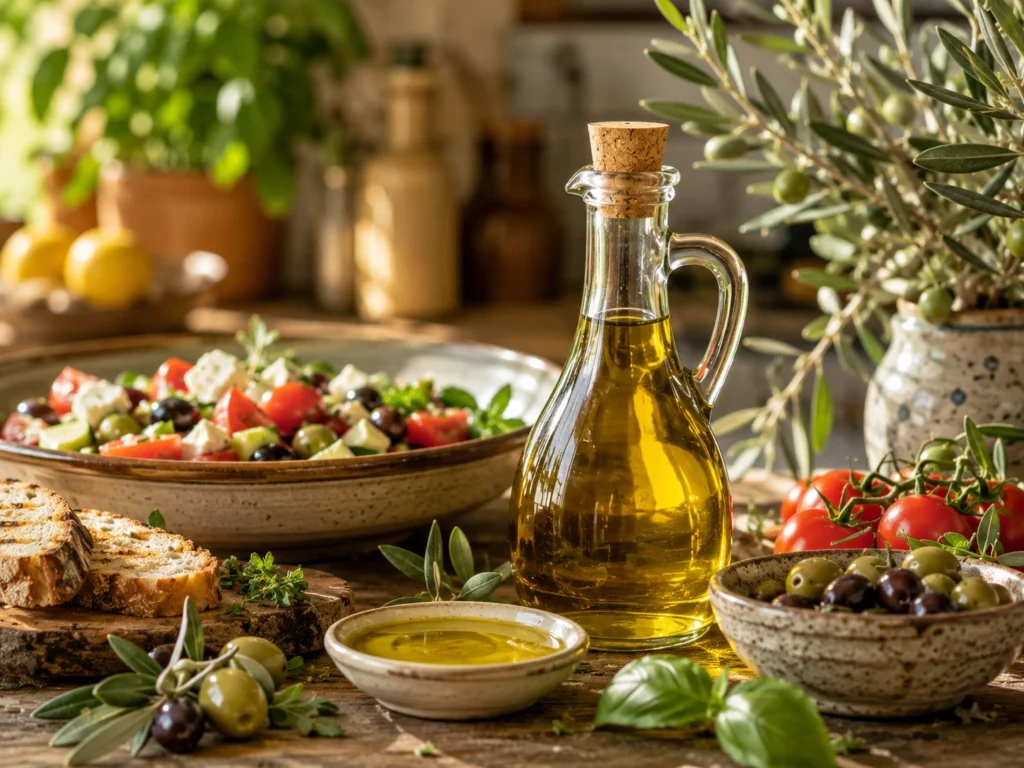
If you’re still cooking with vegetable oil/regular olive oil, I’d suggest switching to extra-virgin olive oil. It holds high levels of polyphenols and oleocanthal because it’s cold-pressed and minimally processed. Both compounds are linked to anti-inflammatory effects in the body. In fact, most people notice improved digestion, less bloating, and lighter meals even within a few weeks.
To show the result, a 2022 Harvard study found that people consuming more than half a tablespoon of olive oil daily had a lower risk of dying from respiratory disease (that’s less than a single drizzle over a salad).
In Mediterranean cooking, extra-virgin olive oil is the main star. You can drizzle over a salad or stir into a Mediterranean dish with fresh herbs and lemon juice. You can also swap it in place of balsamic vinegar and red wine vinegar as a simple dressing base.
My mother used it in her recipes. She stirred it into lentils and poured it generously over roasted vegetables right before serving, which uplifted the taste even more.
I’d recommend you try an extra-virgin olive oil bottle this week. From what I’ve seen in the kitchen and tested in our own recipes, it delivers more depth of flavour.
The Mediterranean Diet Pyramid: How It’s Actually Structured
The Mediterranean diet pyramid divides food into four levels based on how often you should eat them. The structure looks quite different from the USDA plate most Americans grew up with.
|
Pyramid Level |
Food Groups |
How Often |
|
Base |
Vegetables, fresh fruits, whole grains, beans, olive oil, bread |
Every meal |
|
Middle |
Fish, seafood |
Twice a week |
|
Upper Middle |
Chicken, eggs, dairy, rice |
Moderate portions |
|
Top |
Red meat, sweets |
Occasionally |
Most people are surprised to find red meat sitting at the very top of the diet pyramid. The pyramid treats red meat as an occasional addition. That one detail alone shifts what an American weeknight plate looks like (it’s hard but possible gradually).
In short, healthy fats like olive oil sit at the very base alongside vegetables and whole grains. That means every single meal builds around them. With that in mind, use the pyramid as a visual guide for where your plate’s priority sits.
Greek Salad, Greek Yogurt, and Other Everyday Staples
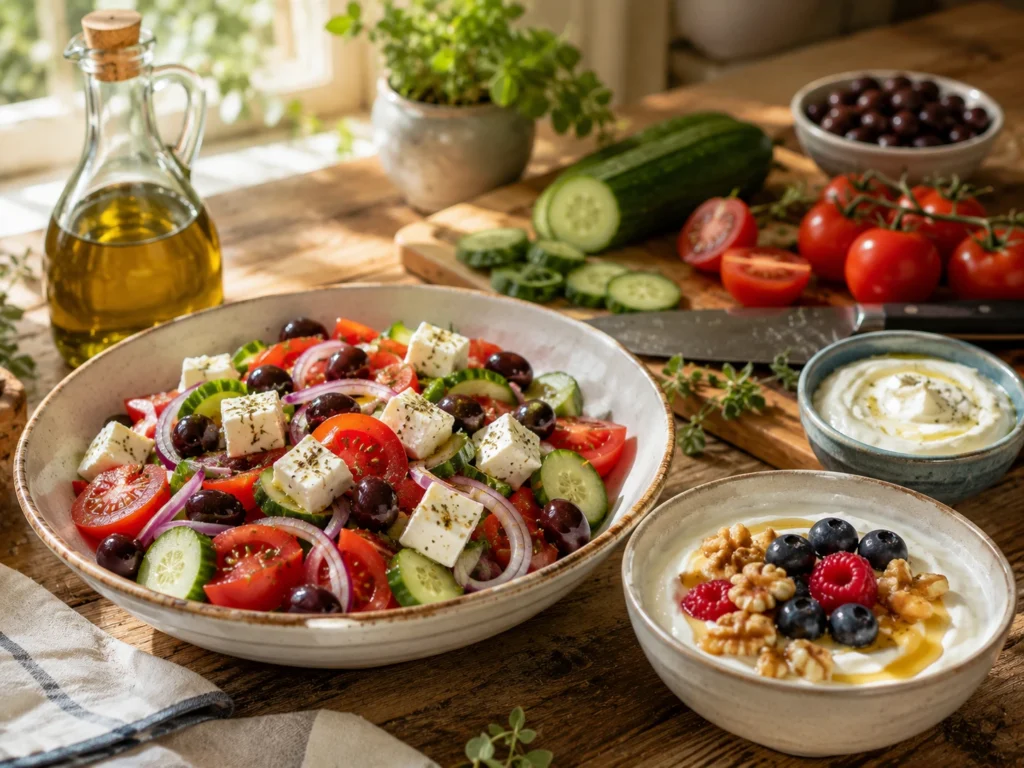
Ever notice how Greek food shows up on every list of healthy cuisines? These dishes center on ingredients that nutritionists have pointed to for decades (olive oil, fresh tomatoes, leafy greens, the whole lineup).
Usually, Greek salad is just cucumbers, juicy tomatoes, olives, chopped onion, and feta cheese. All it takes is a few minutes and a sharp knife. Greek yogurt is another everyday basic. High in protein and probiotics, it works just as well as a substitute for sour cream, mayo, or heavily processed dips.
In many regions across Greece and the broader Mediterranean, this is what lunch looks like on a regular Tuesday.
Let’s walk through where these essentials come from and how to start buying them without overcomplicating your weekly shop.
Greek Island Cooking vs. Everyday Home Meals
The difference between Greek island cooking and mainland home meals gives you two distinct blueprints. It depends on what ingredients you have and what your budget looks like that week.
For example, a coastal Mediterranean diet centers on fresh fish, herbs, and simple ingredients. Greek island communities rely on local access to seafood, capers, and herbs. As a result, fish replaces red meat in most meals.
Across the region, meals emphasize affordability, simplicity, and shared traditions. Home cooks from North Africa to Southern Europe prepare stews and bread-based dishes. This consistency reflects a deep philosophy of fresh, minimally processed, shared food.
So now that you know what to cook, check out how to shop for it without overloading your cart.
Building Your Grocery List Around Mediterranean Basics
A Mediterranean grocery list breaks down into three simple categories. And you can cover all three for well under $50 at most US stores.
- Pantry Basics First: Olive oil, canned tomatoes, pasta, brown rice, beans, and garlic. These cover the primary ingredients of dozens of Mediterranean dishes without refrigeration.
- Fresh Produce Next: Grab bell peppers, seasonal vegetables, sweet potatoes, and whatever fish looks best that week. Round it out with whole grain crackers and pine nuts.
- Finishing Touches: Simple addition of Greek yogurt, feta cheese, dried herbs, and fresh parsley gives meals classic Mediterranean taste.
Long story short, a cart built around these items sets you up for a full week of Mediterranean-style eating without a complicated meal plan or a long receipt at checkout.
Is the Mediterranean Diet Gluten Free?
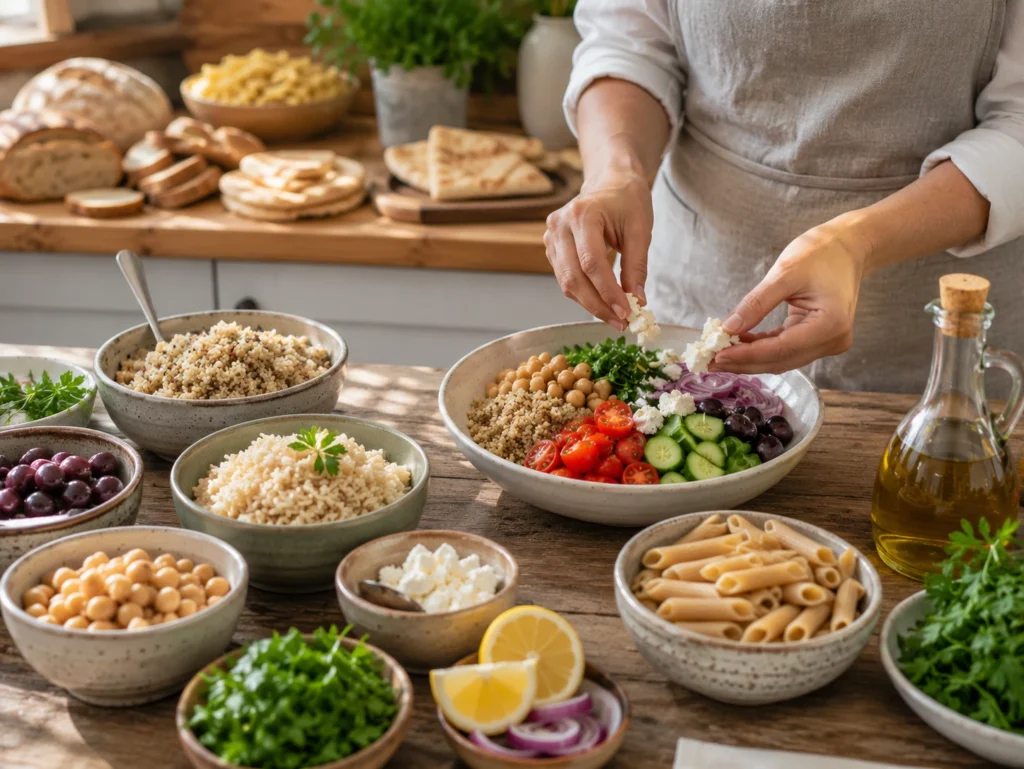
This question constantly arises among people who love Mediterranean food but have celiac disease or a gluten sensitivity.
To be honest, traditional meals include whole grain bread, pasta dishes, and pita. So the default version does contain wheat. However, those foods are easy to replace with brown rice, quinoa, or gluten-free pasta while keeping the same Mediterranean flavors and eating pattern.
Therefore, people with gluten sensitivity can also include naturally gluten-free foods like fresh fruit and dried fruit alongside these substitutes. That way, they can follow every level of the Mediterranean diet pyramid without compromising its main principles.
Ready to Eat Like the Mediterranean? Start Here
The best part about starting a Mediterranean diet is that it is simple and healthy. A bowl of Greek salad, a drizzle of olive oil, and a piece of grilled fish are almost classic.
So naturally, the next step is finding Mediterranean recipes that fit your schedule and your kitchen. Zaytoon’s Food Blog has Mediterranean diet recipes, ingredient guides, and meal ideas built around these principles (and yes, they’re all easy to pull off on a weeknight).
Pick one Mediterranean meal this week. Grab the ingredients I covered, and let the food do the rest.